
Joshua Jama Aid Foundation (JJAF) — Joshua Jama Aid Foundation, humanitarian aid in Nigeria
A registered non-governmental, non-profit organisation dedicated to humanitarian services and community empowerment — restoring hope, promoting self-reliance, and building sustainable communities.
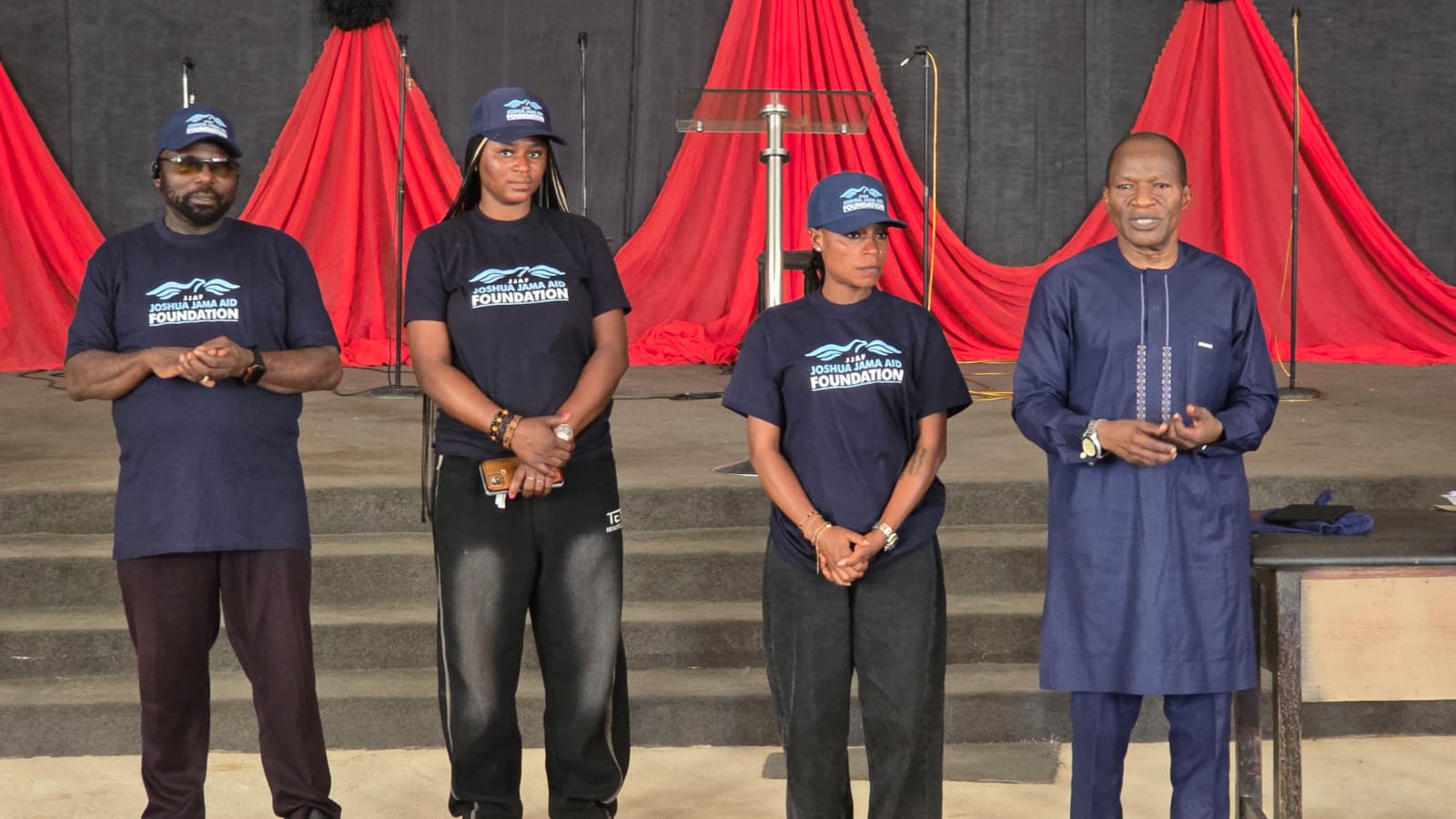
From a church evangelism programme to a nationwide movement
The Foundation was started singularly by Dr Joshua Jama, founder and Senior Pastor of Good News Assembly Church, Salford, Manchester, UK. It began as part of the church's evangelism programme — third-Sunday outreaches, monthly Love Feasts sharing food, drinks and clean clothes with the community, and a monthly Food Bank offering tea, snacks and household items free to anyone in need.
Because so many good donations remained, the church began shipping clothing and household items to Nigeria in December 2014, distributing them in Jos market places to less-privileged individuals. Twice-yearly shipments and outreaches followed and grew rapidly.
In 2024 the ministry was registered with the Corporate Affairs Commission as an NGO, and official distribution of clothes, cooked food and drinks began in April 2025. We have served in Kaduna (through Compassion & Wisdom Ministries under Rev. Dr Uzzah Wado), Abuja, Makurdi, Gboko, Katsina Ala, Keffi and Akwanga.
During the Mangu–Bokkos mass killings, Dr Jama — as Chairman of Nigerian Christians in Diaspora UK — mobilised members to purchase 15 bags of rice, 10 bags of gari, 8 bags of beans and other items delivered to IDP camps in Mangu (broadcast on NTA, PRTV Jos and Plateau Radio/TV). Food and clothing have since reached IDP camps in Mangu, Bokkos, Riyom and Jos North.
Today JJAF is working with 6 orphanage centres (5 in Jos and 1 in Keffi under the Emir of Keffi) and currently supports 25 widows, many bereaved during the Bokkos, Barkin Ladi and Riyom crises.
A compassionate society for all
To build a compassionate society where every individual has equal access to housing or accommodation, education, empowerment, and basic needs.
Dignity, growth, self-sufficiency
To provide support and empowerment to orphans, widows, children, youths and the less privileged through structured programmes that promote dignity, growth and self-sufficiency.
How we serve — practically and sustainably
Widows' Empowerment
Many widows — especially those displaced by Fulani herdsmen or Boko Haram attacks — face financial hardship and social neglect. JJAF provides skills acquisition training (tailoring, catering, hairdressing, beauty, crafts, petty trading), start-up loans and grants, workshops on entrepreneurship and financial management, and trade apprenticeships (mechanics, welding, car wash, vulcanising, barbing).
Education for Children
Education breaks the cycle of poverty. We distribute exercise books, school bags and stationery to pupils from low-income families; offer scholarships and fee assistance for orphans and vulnerable children; run mentorship programmes; and provide exam preparation for those writing GCSE, NECO and School Certificate.
Feed the Street Outreach
We organise regular feeding outreaches — hot meals, snacks and water for the homeless and street children — engage youth in voluntary programmes, and rally community volunteers, donors and skilled people to sustain the feeding programme and train others.
Youth Empowerment
We equip young people with ICT, hairdressing, tailoring, crafts, baking, hospitality and digital marketing skills. Youth leadership and entrepreneurship workshops, mentorship, internships, business seminars with bankers and successful entrepreneurs, and financial-management training round out the programme.
Support & Clothing Distribution
We collect and distribute clothes, shoes and household items to struggling families, launch seasonal campaigns such as "Warm a Soul" (Plateau is a cold state), and partner with governments, churches, tailors, boutiques and market traders for continuous clothing drives.
What we set out to achieve
- 1To economically empower widows to achieve financial independence.
- 2To support children's education and reduce school dropout rates.
- 3To reduce hunger among the homeless and underprivileged.
- 4To build youth capacity for employment and entrepreneurship.
- 5To promote community care and inclusion through humanitarian outreach.
How we deliver
- Needs assessment: identify and register beneficiaries through community leaders.
- Partnerships: collaborate with the Federal Ministry of Humanitarian & Poverty Alleviation, state and local authorities, private donors, NGOs and volunteers.
- Project delivery: organise periodic outreach programmes and empowerment workshops.
- Monitoring & evaluation: track impact, ensure transparency and report outcomes.
The change we're building
- Increased income and independence among widows.
- Improved access to education for children in rural and poor communities.
- Reduced hunger and homelessness through feeding programmes.
- Empowered and skilled youths contributing to society.
- Strengthened community bonds and compassion for the less privileged.
What guides everything we do
Faith
Christ is at the center of every project and every prayer.
Integrity
We steward every gift with honesty and full accountability.
Compassion
We serve with the love of Christ — never pity, always dignity.
Transparency
Open books, open reports, open hearts.
Excellence
The people we serve deserve our very best.
Sustainability
We build change that outlasts our visits.
Partner with us
JJAF welcomes partnership and sponsorship from individuals, corporate bodies, religious groups and government agencies. Support can come as financial donations, food items and clothing, educational materials, vocational tools, volunteer services, or transportation. All contributions are used transparently and accounted for to maximise community impact.